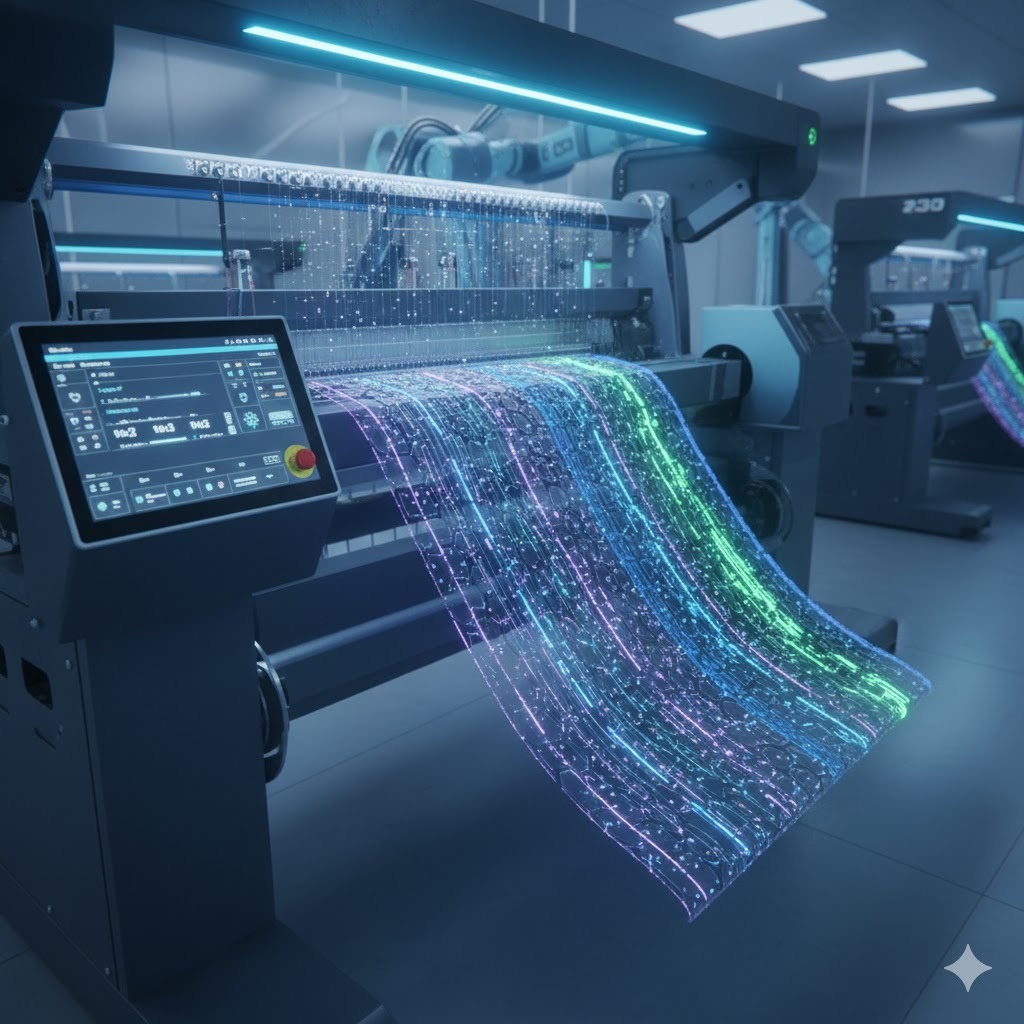





The global manufacturing industry including Levi Strauss & Co. began to employ robots to produce finished clothing. The Head of the Project in the Siemens Laboratory in San Francisco Eugen Solowjow said the clothing sector was the US dollar -value industry which until now has not used automation. "Clothing is an industry worth the last trillions of US dollars that have not been automated," said Eugen Solowjow, who has been working on the automation of making finished clothing since 2018. Monday (12/12), the idea of using a robot was carried out to get momentum during Pandemi because the chain of chains that was chaotic highlighted the risk of relying on far factory.
However, many clothing business actors become silent when alluded to the plan to use automation. Because the automation plan clearly raises workers' concerns in developing countries.
Jonathan Zornow, who has developed techniques to automate several parts of the genie factory, said that he had received online criticism and a threat of murder.
Meanwhile, a spokesman Levi's confirmed his company participated in the initial phase of the automation project, but refused to comment further.
In the automation project, Siemens collaborated with the Advanced Robotics for Manufacturing Institute at the Pittsburgh, which was funded by the Department of Defense to help the old manufacturer found a way to use new technology.
They identified San Francisco's startup with a promising approach to the Floppy Fabric problem.
Instead of teaching robots how to handle fabrics, a pioneering company named Sewbo Inc., hardened the fabric with chemicals so that it can be handled more like a car bumper during production. When finished, the clothes are washed to remove rigid substances.
"Almost every denim piece is washed after being made, so this matches the existing production system," said Zornow, the inventor of Sewbo.
This research effort finally developed to cover several clothing companies, including Levi's and Bluewater Defense LLC small military uniform makers based in the US.
They received a grant of US $ 1.5 million from the Pittsburgh Robotics Institute to experiment with the technique.
Other efforts such as Automation Inc software, a pioneering company in Georgia, which has developed a machine that can sew the shirt by pulling its material on a specially equipped table.