

The government plans to draw up a Draft Government Regulation (RPP) regarding Article 21 Income Tax Withholding Rates (PPh) on Income from Work, Services and Activities. This plan is known from a copy of Presidential Decree Number 25 of 2022 concerning the 2023 Government Regulation Formulation Program signed by Jokowi on December 23, 2022. Tax Observer Danny Darussalam Tax Center (DDTC) Bawono Kristiaji said, the existence of the RPP regarding the withholding of PPh 21 is relevant to recent developments, namely efforts to encourage individual taxpayer compliance which has not been fully optimal and is in line with Indonesian tax reform, one of which prioritizes aspects of certainty and convenience.
Bawono said it needs to be understood that the pay as you earn (PAYE) scheme is a scheme adopted by Indonesia and the majority of countries in the world. However, the basis for imposing taxes and calculating PPh 21 is currently quite diverse and relatively complex. For example, for employees and non-employees, daily wage workers and so on.
In addition, Indonesia also adheres to the PAYE year end adjustment system, meaning that PPh 21 deductions are made monthly (every tax period) taking into account the amount of annualized PPh. Bawono also said that at the end of the year adjustments would also be made so that the deductions made were in accordance with taxable income (PKP).
In practice, he assessed, this would present a number of challenges, for example in calculating the components of gross income, the availability of information on marital status and dependents, regular/irregular income, and employee turnover.
As a result, this will place a large burden on the employer or income, especially if there is an error in calculating the deductions.
"Meanwhile, from the government's side, this complexity has the potential to cause revenue forgone (lost income) due to calculation errors. Therefore, efforts are needed to simplify PPh 21 deductions," said Bawono, Wednesday (28/12).
Bawono revealed, there are at least two solutions and have been considered in the RPP. First, there is a clustering of several PPh 21 deduction calculation schemes with similar characteristics so they are not too complicated.
For information, currently there are at least 13 PPh 21 groups ranging from permanent employees, experts, activity participants, state officials, to retirees whose rates and tax bases differ.
"It would be very good if there is a simplification of these variations," he said.
Second, there is an effective tax rate scheme through the tax table for calculating PPh 21 periodically. Bawono explained, the tax table provides information on the amount of tax payable or the effective rate over a certain income range.
"With the effective tariff, it will certainly make it easier for employers, especially labor-intensive companies," explained Bawono.
Contacted differently, the Executive Director of the Pratama-Kreston Tax Research Institute (TRI) Prianto Budi Saptono said the RPP was a mandate from the provisions of Article 21 paragraph (5) of the Income Tax Law after the revision of the HPP Law. Then, the government was given the authority to set special rates based on PP 41/2016. These provisions regulate PPh Article 21 on employee income from employers with certain criteria.
It's just that, he believes that the RPP will not have a significant macro impact, because it is only given to low-income employees in sectors that receive facilities.
"The principle of justice is neglected because not all sectors receive it," said Prianto.
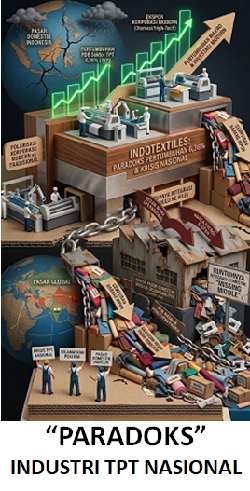
Prianto explained, PP 41/2016 only applies to employees whose income in a year is not more than IDR 60 million. The tax rate is only 3.5% and is final. In addition, employers who receive PP 41/2016 facilities are only companies in the footwear and textile and textile products (TPT) industry.
"When viewed from the arrangements in PP 41/2016, the RPP is not very important. As evidence, after PP 41/2016 ends in 2017, there are no more similar arrangements as a substitute for PP 41/2016," he said.