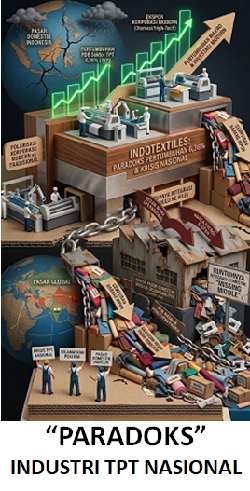


Bank Indonesia (BI) West Java estimates that there will be turmoil in the textile and textile products (TPT) industry following global geopolitical conditions and rising wages. A number of steps need to be taken so that this labor-intensive industry does not disturb West Java's economic stability. "The TPT industry needs to be watched out for, because analysts say that in 2023 there will be an economic slowdown due to high inflation in export destination countries. So the demand for TPT products is expected to slow down," said the Head of the West Java BI Office, Erwin Gunawan Hutapea in Bandung, Tuesday (14/2/2023).
Currently, he said, export performance has shown a slowdown. For example, exports to the United States have begun to decline. High inflation in America and Europe caused consumers to refrain from buying clothes or other textile products.
Not only that, another issue is the matter of wages. Where this year the city/district minimum wage (UMK) in West Java has increased between 6-10 percent. This increase is expected to put pressure on the TPT industry.
"When they try to reduce expenses by reducing labor costs, they may move to areas with lower MSEs," he explained.
The relocation of the TPT industry from West Java, continued Erwin, would cause new problems, including increasing unemployment. This condition affects the economy of West Java. Moreover, West Java's economy so far has been supported by the manufacturing industry for 40 percent.
Throughout 2022, West Java's economy is recorded as the highest in Java, reaching 5.3 percent. Even so, economic growth in the fourth quarter tends to slow down to 4.6 percent compared to the previous quarter.
“One solution that can be done is to work on new markets. Actually the potential of the ASEAN market is quite good. Their economic growth is also good. So they can become our TPT market target," said Erwin.