


The Ministry of Industry (Kemenperin) continues to encourage the implementation of green industry policies and the development of functional textiles in the textile and textile product (TPT) industry, including small and medium scale businesses. As an effort to support the capabilities of Small and Medium Industries (IKM) in implementing green industry, the Ministry of Industry runs the Industrial Technology Improvement Partnership Fund (DPATI) program.
BALANCE SHEET
The Head of the Standardization and Industrial Services Policy Agency (BSKJI) of the Ministry of Industry, Doddy Rahadi revealed, one form of implementation of the DAPATI program is consulting and guidance activities to increase the efficiency of the production process technology and WWTP performance by the DPATI consultant team from the Center for Standardization and Industrial Services Services (BBSPJI) Bandung Textile.
The implementation of consulting and guidance for IKM has had a positive impact in the form of efficient use of energy and water, as well as reducing the amount of use of chemicals that can pollute the environment. One of the companies that received consultancy and guidance was CV. Oshwin Bustari Makhruf, IKM which is engaged in the textile apparel washing garment process services located in Bandung Regency, West Java.
The DAPATI BBSPJI Textile consultant team has also introduced the technology for the process of perfecting simple textiles with value-added products to the Bentang Terang Putri traditional woven IKM, Majalaya, Bandung Regency. The output of these textile improvements includes producing a type of functional textile, namely anti-bacterial fabric which is starting to be in demand by the domestic market.
"The challenge for SMEs in implementing technology is the need for quite large machine capital for the refinement process. However, through consulting activities and laboratory-scale experiments, process technology can be simplified and implemented in IKM," said Doddy.
Doddy said, CANATI is a routine program from the Ministry of Industry's Industrial Service Standardization and Policy Agency. This program aims to provide facilitation of increasing technological capabilities through technical guidance and industrial assistance to IKM so that they can have the same opportunity to upgrade to become an environmentally friendly industry, as well as become part of the ecosystem of functional textile producers.
The DAPATI BBSPJITextile program is expected to be able to change the paradigm that technology is not something exclusive. “Through adoption and reverse engineering process technology innovations can emerge, which can be applied in small and medium scale industries. This is the important role of Industrial Trustees that can be felt directly by industry players," explained Doddy.
Head of BBSPJI Textile Bandung, Cahyadi added, BBSPJI Textile industry coaches are ready to provide solution-based assistance for IKM and new entrepreneurs in the TPT sector through process technology optimization and engineering, technical consulting, to technical guidance. "This includes fiber, yarn, fabric, apparel development activities, dyeing and fabric refinement, and management systems," explained Cahyadi.
Two CAN activities in the TPT sector have yielded encouraging results. CV. Oshwin Bustari Makhruf felt a significant impact on several aspects, including reducing the intensity of water consumption by 15 percent, reducing the intensity of energy consumption by 36 percent, and reducing chemical consumption by 15 percent.
"This activity is beneficial for us, because increasing efficiency can reduce the company's operational costs, especially from the aspect of the cost of using water, energy and chemicals," said the Director of CV. Oshwin Bustari Makhruf, Ismail Makhruf.
At the Bentang Terang Putri IKM, tests for the application of anti-bacterial enhancements to woven ATBM fabrics showed an anti-bacterial ability up to 25 times household washing with the effectiveness of the anti-bacterial function tested against Staphylococcus aureus bacteria of 87.44 percent, while after washing it was 67.71 percent. percent.
“Traditional woven fabrics which are usually rarely washed can now avoid odors caused by bacteria. This increases the convenience for the user. In the future, we hope to continue working with BBSPJI Textiles, so that this refinement process can also be applied to yarn raw materials," said the owner of IKM Bentang Terang Putri, Cucu Juariyah.
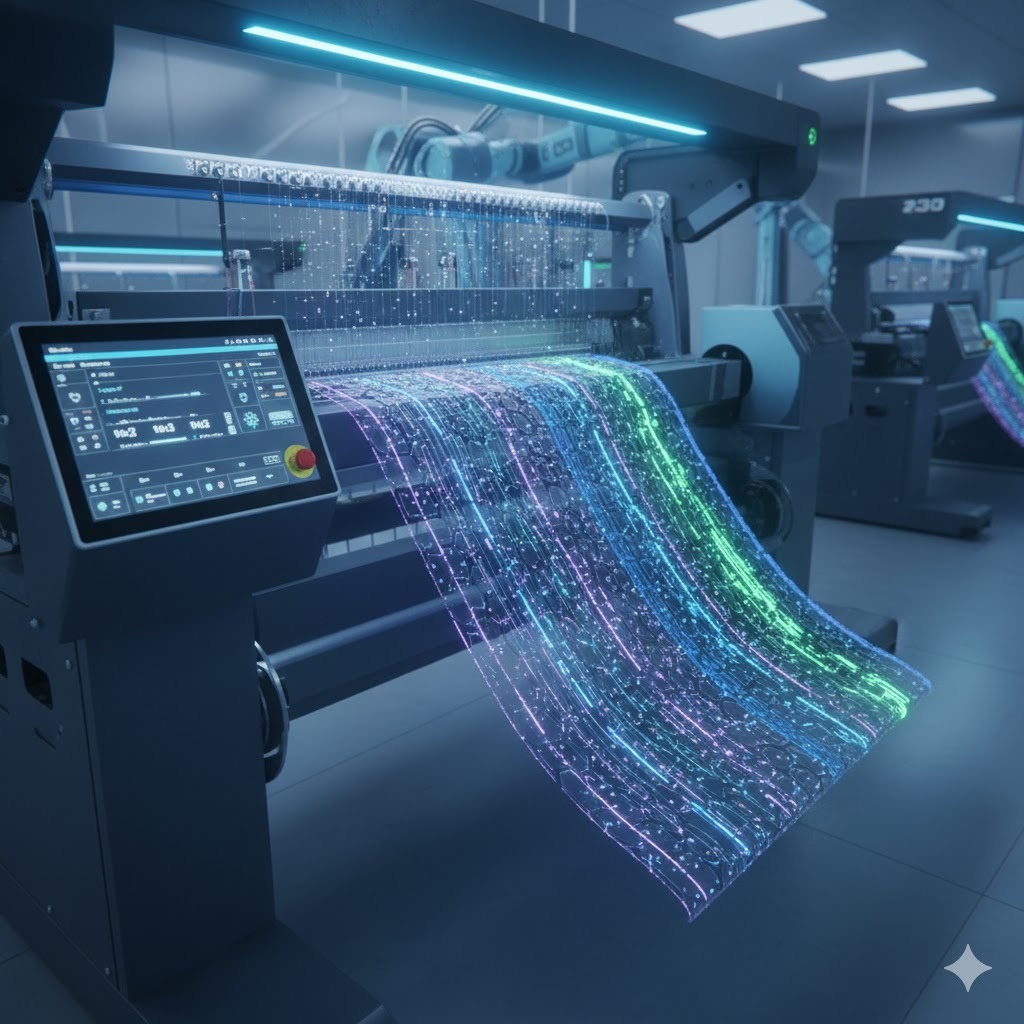
Not only that, the Ministry of Industry also continues to encourage the performance of the TPT industry in the face of global uncertainty which has an impact on the decline in exports of this sub-sector. One of the steps taken is through a machine restructuring program to stimulate the use of more modern, efficient and environmentally friendly equipment so as to increase competitiveness, in accordance with the Making Indonesia 4.0 roadmap.