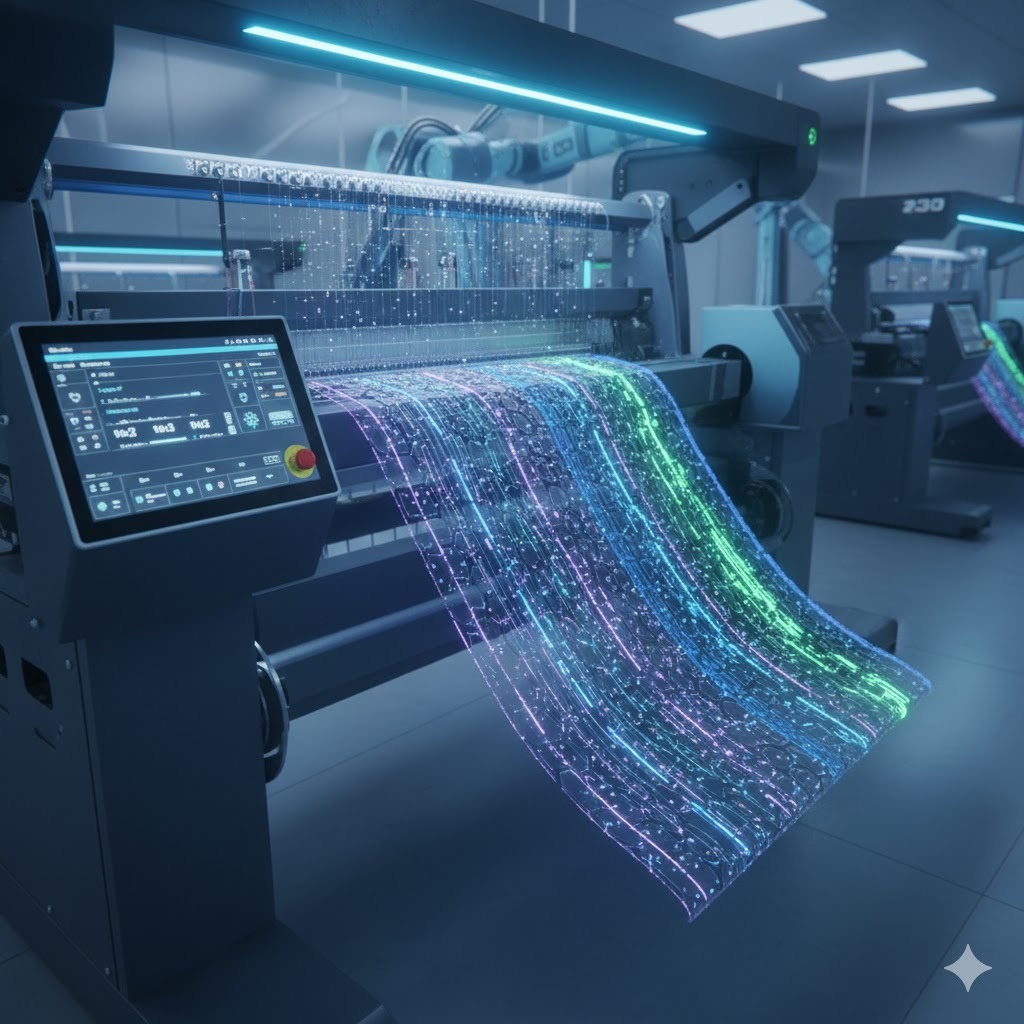



A number of chemical, pharmaceutical and textile industry (IKFT) sectors in the country have transformed towards digitalization in their production processes. The application of industrial technology 4.0 in the manufacturing sector group is believed to be able to boost its performance and competitiveness. "We continue to encourage the IKFT sector in Indonesia to be able to utilize industrial technology 4.0 to support its production process so that it can produce various quality products more efficiently," said Director General of IKFT of the Ministry of Industry, Muhammad Khayam in Jakarta, Sunday (31/10).
At the Dubai Business Forum Expo 2020 event, the Director General of IKFT said that several companies in the IKFT sector have implemented digitalization in the form of internet of things, artificial intelligence, cloud technology, nano technology, blockchain technology, and telemedicine.
"We will direct the IKFT sector to immediately adopt industrial 4.0 technology without reducing the workforce. This means that the use of technology that will be encouraged is the one that can solve the bottleneck in the production process,” he explained.
According to Khayam, the ability of the IKFT sector in implementing industry 4.0 cannot be doubted. This is reflected in the increasing number of IKFT sectors participating in the Indonesia Industry 4.0 Readiness Index (INDI 4.0) assessment program. This activity, which was initiated by the Ministry of Industry, is to measure the readiness of manufacturing companies in Indonesia to implement industrial technology 4.0.
In 2020, as many as eight IKFT sector companies won awards from the results of the INDI 4.0 assessment, obtaining an index above a value of 3. In the INDI 4.0 assessment, a score of 1-2 indicates the initial readiness for the implementation of industry 4.0. Then a score range of 2-3 indicates moderate readiness, and a score of 4 is for those who have implemented industry 4.0.
Of the eight companies, those from the chemical industry sector are PT. Kaltim Parna Industri, PT. Biggy Cemerlang, and PT. Schott Igar Glass. Then for the pharmaceutical industry sector, namely PT. Kimia Farma Sungwun Pharmacopia. Next, the textile industry sector includes PT. Globalindo Intimates, PT. TI Matsuoka Winner Industry, and PT. Asia Pacific Region. Meanwhile, representing the IKFT sector, the company that won the National Lighthouse Industry 4.0 category was PT. East Kalimantan fertilizer as a chemical industry.
Khayam emphasized that his party continues to spur the IKFT sector to be ready to enter the 4.0 industrial revolution. "According to the performance targets set by the Ministry of Industry based on the 2020-2024 RPJMN, one of the targets is the number of IKFT sector companies with an INDI 4.0 value of more than 3, could reach 16 companies in 2021, and as many as 21 companies in 2024," he said. .
The Director General of IKFT admitted that he is optimistic about the IKFT sector in accelerating towards industry 4.0. Moreover, in the Making Indonesia 4.0 roadmap, initially it has established IKFT sector representatives who are pioneers in the application of industry 4.0 in Indonesia, namely the chemical industry as well as the textile and clothing industry. Then, in the midst of this pandemic, the Ministry of Industry has also included the pharmaceutical industry and the medical device industry as well as getting the priority of developing industry 4.0.
"The existence of the IKFT sector cannot be ruled out in supporting the Making Indonesia 4.0 program, where the IKFT sector is one of the leading sectors in the road map," said Khayam. This is thanks to the contribution of the IKFT sector in spurring national economic recovery.
In 2020, the IKFT sector contributed 4.48% to the national economic GDP. This is driven by the role of the chemical, pharmaceutical and traditional medicine industries which were able to grow in the midst of the Covid-19 pandemic by 9.39%.
In addition, in 2020, IKFT sector exports reached USD33.99 billion. Realized investment in that period amounted to Rp61.97 trillion, dominated by the chemical and chemical industry. The sector also absorbs up to 6.24 million workers.