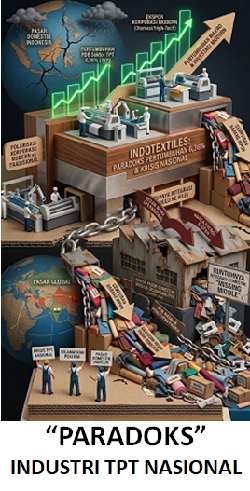


Prolonged logistical constraints due to the scarcity of containers that have caused shipping costs to soar have pushed the domestic market to become the foundation for the recovery of the domestic textile and textile product (TPT) industry. The Indonesian Filament Fiber and Yarn Association (APSyFI) stated that the demand for the export market is still quite large due to logistical constraints. APSyFI Secretary General Redma Gita Wirawasta said the recovery momentum driven by the growth of the domestic market had to be guarded against the impact of the spread of the Covid-19 variant of the omicron.
“We can still export, but it is a bit difficult to increase it, even though the demand is high. The local [market] is the main focus, don't let us get PPKM because of Omicron," said Redma, Sunday (12/5/2021).
Meanwhile, export performance and production utilization have not been affected by the spread of the Omicron variant in various countries. However, the spread of omicron in the United States and the European Union should be watched out for, considering that these two regions are the main markets for Indonesian textile exports.
"If Omicron attacks there, and there are restrictions, that's what we're worried about," he said.
Domestically, he said, his party supports the implementation of level 3 community activity restrictions (PPKM) during the Christmas and New Year holidays, in particular to stem the entry of the Omicron variant into Indonesia.
Moreover, even though there have been improvements, the condition of the textile industry in general is still affected by the pandemic that has eroded working capital.
With the implementation of appropriate restrictions and anticipatory strategies, it is hoped that the next wave of pandemics in the country will not occur which will result in a stagnation of the economy. Read also: Be careful, next year the textile industry will be hit by electricity tariffs
“Don't let the local [market] collapse. If the local collapse is a bit more difficult [to grow], it's still bleeding because yesterday, the working capital was also tight," he explained.